Introduction
For textile designers and fashion brands, floral patterns often present a unique creative challenge. Capturing delicate color transitions—such as pink fading into cream or yellow blending into orange—requires a high level of precision.
Traditional screen printing struggles with these effects. Each color needs a separate screen, which increases production costs, extends lead times, and limits design flexibility.
Digital printed fabric solves these limitations by printing directly from a digital file onto textile materials. There are no screen restrictions, no practical color limits, and no minimum order constraints. Complex floral designs, from detailed peonies to realistic jungle vines, can be reproduced exactly as intended without compromise.
This article explores the advantages of digital printed fabric for floral patterns, compares digital printed fabric in textile design with traditional printing methods, and highlights the key applications of digital printed fabric in fashion. It also explains why this technology has become a preferred choice for designers, brands, and manufacturers.
What Is Digital Printed Fabric?
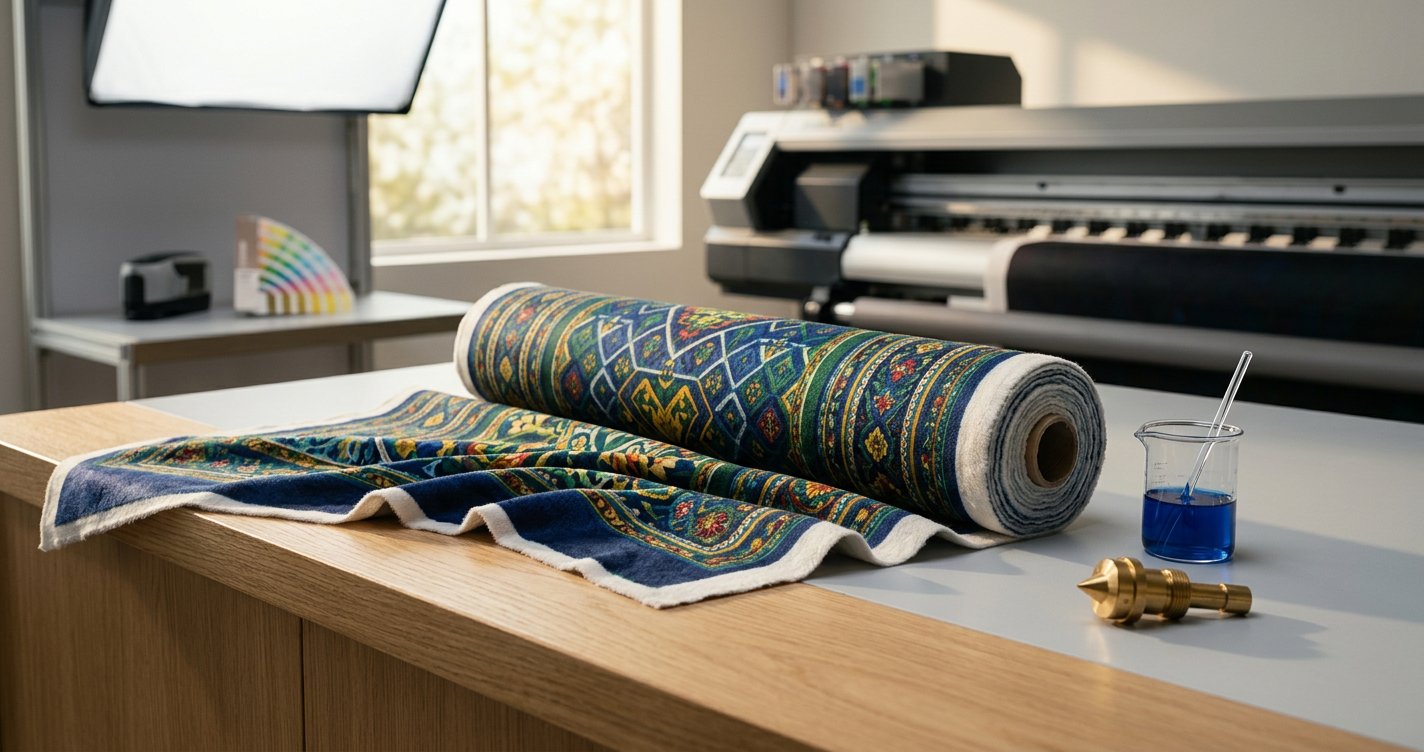
Digital printed fabric is produced using inkjet printing technology. A digital textile printer reads a design file—directly from software like Adobe Illustrator or Photoshop—and sprays microscopic droplets of ink onto fabric. The process is fully digital: no plates, no screens, no cylinders, no long setup.
This is fundamentally different from rotary screen printing, the industry’s dominant conventional method, which engraves each color layer onto a separate cylindrical screen. The digital version of textile printing supports quick, cost‑effective production of small fabric batches, making it ideal for short production runs and on‑demand printing, which are suited for the fast fashion and e‑commerce sectors. Designers are now able to experiment more freely, leading to faster trend adoption and personalized fashion.
Advantages of Digital Printed Fabric for Floral Patterns
Floral textile design demands capabilities that traditional methods struggle to deliver. Digital printed fabric meets—and exceeds—every one of those demands.
Unlimited Colors, No Extra Cost
In screen printing, each color requires its own engraved screen and a separate pass through the machine. A complex floral pattern with forty‑five subtle shades would require forty‑five screens, forty‑five setups, and a price tag that makes the design impossible to produce. Digital printed fabric treats every color equally. A design with five colors costs the same to produce as one with five hundred. The printer simply reads the file and prints.
Photorealistic Detail and Gradients
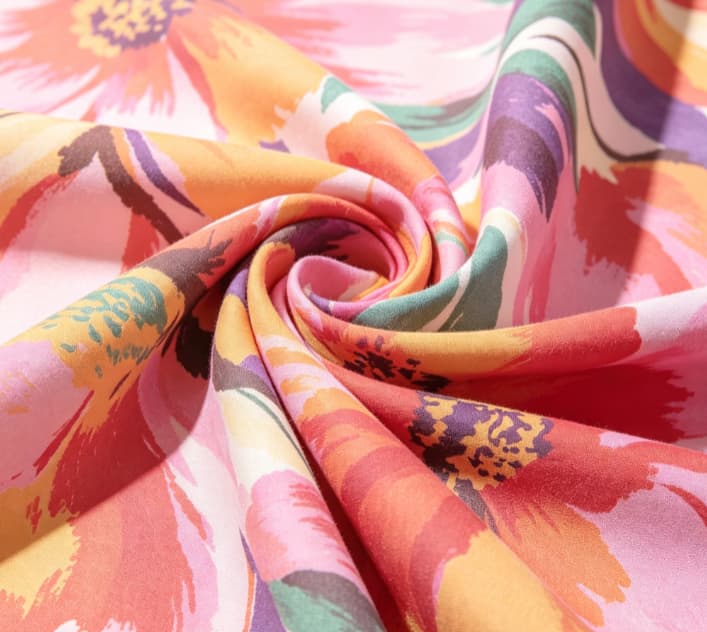
Florals live in the details: the soft blush at the tip of a petal, the delicate vein lines on a leaf, the transition from deep burgundy to pale pink. Screen printing relies on solid halftone dots to simulate gradients, resulting in a coarser, less natural appearance. Digital printed fabric delivers continuous tone printing. Droplets as small as four picoliters—thinner than a human hair—build up color smoothly, creating seamless transitions. This capability makes digital printed fabric especially valuable for photorealistic floral patterns, where natural gradients are crucial to the aesthetic.
Zero Minimum Order Quantity
Traditional screen printing requires high minimum orders to justify the cost of screen engraving and setup, typically 1,500–2,000 meters per design. Digital printed fabric has no minimum. Whether a designer needs one meter for a sample or five thousand meters for a full collection, the cost per meter remains consistent. This freedom allows emerging brands to launch with limited runs and established houses to produce capsule collections without warehousing excess inventory.
Rapid Sampling and Iteration
A designer conceives a floral motif on Monday. By Wednesday, they can hold the finished fabric in their hands. Digital textile printing eliminates the week‑long screen‑making process. A file is sent to the printer, and the fabric emerges minutes later. Designers can test multiple colorways, scale patterns up or down, and refine placements without waiting. Several iterations—bright summer tones versus muted autumn shades, large‑scale blooms versus small ditsy floral prints—can be evaluated side by side in a single afternoon.
On‑Demand Production, Zero Overstock
Brands using digital printed fabric can adopt a made‑to‑order model. Instead of forecasting demand months in advance, they print fabric as orders arrive. This eliminates deadstock, reduces warehousing costs, and allows collections to respond to actual market demand rather than projections.
Digital Printed Fabric vs Traditional Printing
The differences between digital printed fabric and traditional rotary screen printing go far beyond the economics.
| Factor | Digital Printed Fabric | Rotary Screen Printing |
|---|---|---|
| Setup time | Minutes (file → print) | Days (screen engraving) |
| Color limit | None (print any number) | Each color = new screen |
| Minimum order | Zero meter | 1,500–2,000 meters |
| Cost per meter at low volumes | Low | Very high (setup cost) |
| Cost per meter at high volumes | Higher | Low (spread over length) |
| Gradient quality | Continuous tone, smooth | Halftone dots, coarser |
| Design changes | Instant (edit file) | Expensive (new screens) |
| Sample turnaround | Hours | Weeks |
| Suitability for large volumes | Good (modern printers) | Excellent |
Digital printing’s real advantage lies in its flexibility. For designs requiring many colors, frequent updates, or short runs, digital wins. Screen printing still leads for massive, single‑design runs of simple color‑separated patterns. But for modern floral textile design—where color depth, detail, and design agility matter most—digital printed fabric is the natural fit.
Digital printing uses computer-controlled technology to directly print designs on fabrics, with richer pattern details and color layers. It offers accurate color, high precision, good repeatability, and is suitable for small batch production without minimum order quantities.

How Digital Printed Fabric in Textile Design Empowers Florals
The impact of digital printed fabric in textile design is most visible in the floral category. For decades, floral patterns followed predictable conventions because those were the only patterns screen printing could execute efficiently. Small, repeating motifs; four to six colors; cleanly separated shapes with minimal overlap. Digital printing removes these constraints entirely.
Seamless Large‑Scale Florals
Screen printing struggles with oversized blooms because the pattern must repeat seamlessly across the fabric width. Digital printed fabric does not have this limitation. A single dramatic rose spanning the entire width of a dress can be printed as easily as a tiny all‑over ditsy print.
Watercolor and Painterly Effects
The one thing digital printing does better than any other method is simulate the randomness and fluidity of hand‑applied paint. Watercolor florals—wet‑on‑wet blooms with blurred edges and pooling pigment—look artificial when screen printed because the halftone dots introduce regular, mechanical structure. Digital printed fabric captures the organic chaos of a brushstroke, making painterly floral collections possible at a commercial scale.
Photo‑Realism and 3D Effects
The line between photography and textile design is blurring. Digital printed fabric can reproduce scanned flower photographs directly onto fabric with near‑photographic detail. Floral prints in 2025 are taking on a futuristic twist, with high‑contrast floral merging realism with surreal saturation, offering an almost 3D effect, thanks to technological advancements in textile printing. Brands can print an actual flower from a botanical garden, preserving every petal fold and stamen tip as a wearable design.
Hyper‑Surrealism and Impossible Colors
Leading‑edge floral design has moved into hyper‑surrealist botanicals, an aesthetic that moves past simple flower patterns to introduce fantastical, otherworldly plants with impossible colors and strange textures. Many elements appear to glow with a soft, bioluminescent light, creating a dreamlike, alien jungle on fabric. These designs are impossible to produce with screen printing but are directly accessible through digital printed fabric, opening new creative frontiers for botanical textile art.
Uses of Digital Printed Fabric in Fashion and Beyond
The use of digital printed fabric in fashion has expanded rapidly as designers discover the technology’s capabilities.
Luxury Ready‑to‑Wear
High‑end fashion houses use digital printed fabric for intricate, multicolored floral dresses and blouses where traditional screen printing would be prohibitively expensive. A single garment containing twenty‑three distinct floral shades—once reserved for couture hand‑painting—is achievable at scale.
Fast Fashion and Trend‑Driven Collections
Fast fashion demands speed, not per‑unit efficiency of high‑volume runs. A trend spotted on TikTok or Instagram can move from concept to retail in days using digital printed fabric. Online retail platforms and customized print services have developed rapidly, making consumers increasingly inclined to purchase personalized and customized textiles through digital channels. Brands can print 200 meters of a viral floral print, sell out, and decide whether to reprint or move to the next trend—no inventory risk.
Bridal and Evening Wear
Bridal designers have embraced digital printed fabric for custom floral appliqués and placement prints. A bride’s signature bloom can be scaled, positioned, and repeated across a gown exactly as specified. The same technology produces one‑off sample gowns and full wedding party orders without requiring separate setups.
Home Textiles and Interiors
Floral printed fabric is equally important in home décor: upholstery, curtains, bedding, and indoor/outdoor cushions. Digital printed fabric allows interior designers to specify bespoke floral motifs for hospitality projects, healthcare environments, and residential installations without stock minimums or long lead times.
Market Growth – Why Digital Printed Fabric Is Accelerating
The global digital textile printing market was valued at approximately 3.85 billion USD in 2025 and is projected to reach around 4.43 billion USD by 2026, growing at a compound annual growth rate (CAGR) of about 15.1%.
The shift from conventional textile printing toward digital has been rapid, driven by extended fast fashion production cycles, growing demand for design flexibility, reduced water consumption compared to conventional methods, and expanded digital design workflows.
Growth factors include rising demand for on‑demand textile production, increasing emphasis on sustainable textile manufacturing, higher automation of print production lines, growth of the personalized apparel market, and technological advancements in digital ink formulations.
Sustainability plays a major role. Conventional textile printing is water‑intensive and generates significant waste. Digital printed fabric uses up to 90% less water and eliminates dye contamination. Inks are GOTS‑certified, and the process produces absolute zero waste: one can print as per requirement, so waste is eliminated, and water does not get contaminated and can be recycled and reused.
How Digital Printed Fabric Is Shaping Modern Floral Aesthetics
Designers in 2025 are using digital printed fabric to push floral design in entirely new directions.
SS26 fashion shows saw expressive revival, with patterns reclaiming the spotlight as the ultimate storytelling medium, marking a bold departure from recent minimalism. Florals bloomed anew, from dainty coquette bouquets to exuberant 80s‑inspired blossoms, infusing femininity with digital precision and layered color blocking.
Florals in 2025 are evolving into something much more sophisticated and diverse. From the bold, oversized blooms in Milan to the surreal dreamscapes in Paris, florals are redefining their place in the fashion world.
Designers are merging floral with glitch aesthetics, digital distortion, and fractal patterns impossible to produce with analog tools. Petra Fagerström’s SS26 collection produced fabrics that appear to glitch in real time – flickering between painted flowers and tattoos on skin as the wearer moves. The work uses digital tools conceptually, undergoing an extremely labor‑intensive process of painting, pleating, and oil work.
Floral patterns in 2025 are expected to merge classical elements with modern aesthetics, blending bold colors and delicate detailing suited for both casual wear and upscale fashion, incorporating sustainable materials and advanced printing technologies to create eco‑friendly, visually striking pieces. Bold florals have taken center stage, with designers favoring large, colorful blooms covering whole garments in a shift from delicate, traditional florals to dramatic, eye‑catching patterns.
FAQ
Q1: What is digital printed fabric, and how does it work?
Digital printed fabric uses inkjet technology to print designs directly from a digital file onto fabric—no screens, plates, or minimum order quantities required.
Q2: Is digital printed fabric as durable as screen‑printed fabric?
Yes. Modern digital pigment and reactive ink systems achieve Grade 4–5 wash fastness, comparable to high‑quality screen printing.
Q3: Can digital printed fabric handle large production volumes?
Yes. Advanced high‑speed digital printers can manage commercial volumes cost‑effectively, offering the flexibility to scale from small samples to bulk orders.
Q4: What is the minimum order quantity for digital printed fabric?
Zero. Digital printed fabric has no minimum order requirement, making it ideal for sampling, custom work, and small collection runs.
Q5: How does the cost of digitally printed fabric compare to screen printing?
For short runs and complex multicolor designs, digital is more cost‑effective. For very long, single‑design runs over several thousand meters, screen printing remains cheaper per meter.
Conclusion
Digital printed fabric has significantly expanded what is possible in textile design, particularly in the floral category. With unlimited color expression, photorealistic detail, zero minimum order requirements, on-demand production, and the ability to realize highly complex botanical concepts, it has become an essential tool in modern fabric development.
Designers who once worked within the constraints of traditional printing methods now have far greater creative freedom. From luxury fashion runways to fast fashion collections and custom bridal designs, digital printing enables floral textiles that are more detailed, expressive, and visually dynamic than ever before.
If you are developing floral textile collections and want to explore the potential of digital printed fabric, we provide custom printing solutions with flexible order quantities, high-resolution output, and fast production turnaround. You can contact us to request samples, discuss design requirements, or learn more about available printing options for your project.