Introduction
For most modern home textile applications, Brushed Cotton Digital Print Fabric outperforms traditional printed cotton across the board. For anyone evaluating fabric options, Brushed Cotton Digital Print Fabric offers distinct advantages in comfort, design precision, and production flexibility. While both have their place, the combination of thermal comfort, design precision, and production flexibility gives brushed digital printing a decisive edge.
The real question isn’t whether it’s better—it’s how much better, and for whom. Let’s break down the differences across the categories that actually matter: how the fabric feels against your skin, how it looks after a dozen washes, what it can do for your design projects, and whether your wallet (or your cat) will thank you.
What Actually Sets Brushed Cotton Digital Print Fabric Apart?
Before we pit them against each other, we need to understand what each term means—because most people constantly confuse them. Traditional printed cotton and Brushed Cotton Digital Print Fabric start from the same base material (cotton) but diverge completely in processing.
From Raw Cotton to Cloud-Like Softness: The Brushing Process
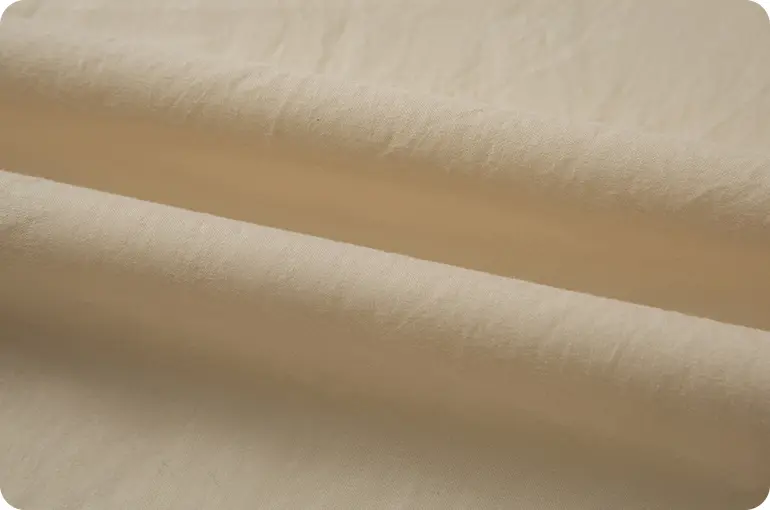
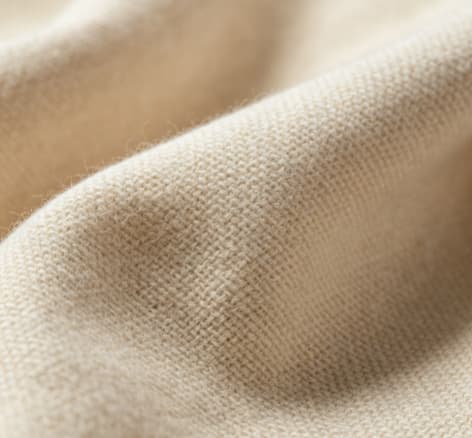
Traditional printed cotton is woven, then printed, and that’s about it. But brushed cotton digital print fabric (often marketed as Brushed Cotton Digital Print Fabric by premium suppliers) undergoes a mechanical “brushing” treatment that literally raises the fibers on the fabric’s surface. Imagine running fine wire brushes across the cloth thousands of times per minute—that action lifts short cotton fibers upward, creating a dense, velvety pile that traps warm air between you and the outside world.
A leading bedding manufacturer notes that the brushing process “removes short fibres, leaving behind a dense layer of long fibres that traps air, thereby providing excellent warmth without excessive weight”. That’s why a brushed cotton sheet feels significantly warmer than a standard cotton sheet of the same weight—it’s not heavier, just smarter about holding onto body heat.
Digital Printing vs. Traditional Screen Printing: A Technology Divide
Here’s where the digital component changes everything. Traditional printed cotton relies on rotary screen printing: each color in a design requires its own engraved metal screen, and the fabric runs through the machine once per color. For a 6-color floral pattern, that’s six separate passes, six screens to manufacture, and six rounds of setup and cleanup.
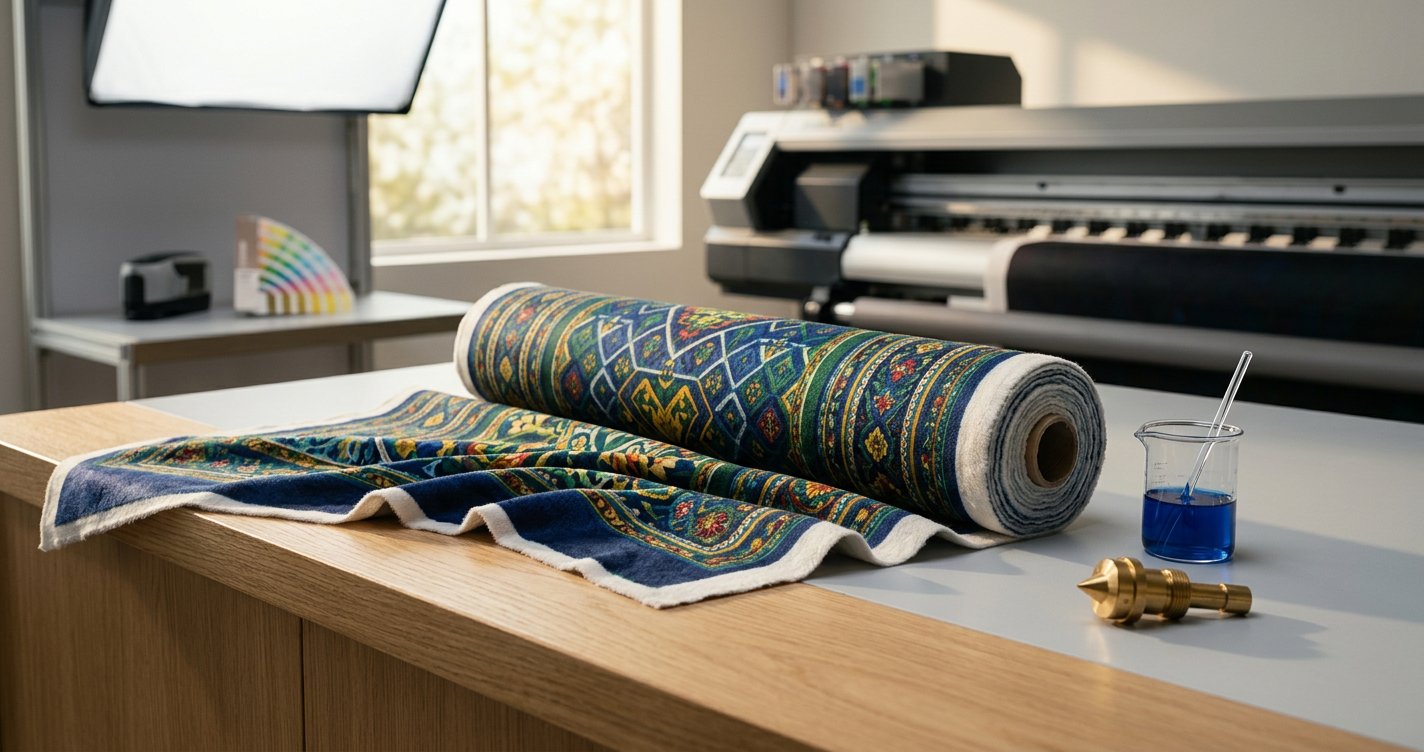
Digital textile printing, by contrast, works like an oversized inkjet printer for fabric. Inkjet systems transfer digital designs directly onto materials with “no plates or screens required,” offering “rapid setup, precise color control, and high-definition results”. A design that might take weeks to screen-print can go from digital file to finished fabric in days.
This technology also enables on-demand production. Digital printers “do not require lengthy setup/cleanup time between patterns and can theoretically print 24 hours a day, 7 days a week, and 365 days a year”. That means small-batch orders—even single rolls—become economically viable, which opens up possibilities that traditional printed cotton simply can’t offer.
The Four Categories That Actually Matter
Let’s compare Brushed Cotton Digital Print Fabric against traditional printed cotton where it counts: touch, look, durability, and health.
Category 1: Tactile Experience (How It Feels)
| Feature | Brushed Cotton Digital Print Fabric | Traditional Printed Cotton |
|---|---|---|
| Surface texture | Plush, velvety, cloud-like | Flat, smooth, can feel stiff |
| Warmth retention | Excellent (traps air effectively) | Moderate (minimal insulation) |
| Breathability | Balanced (warm but not sweaty) | High (too breathable for cold weather) |
| Skin sensitivity | Gentle, hypoallergenic | Neutral—no special benefit |
The brushing process makes all the difference. As one industry source puts it, the raised fibers create a “velvety finish that feels gentle against the skin” while simultaneously “enhancing the fabric’s ability to trap heat”. This dual-action—softness plus insulation—is what makes Brushed Cotton Digital Print Fabric so distinctive.
For anyone who has ever crawled into cold sheets on a winter night, the difference is immediate. Traditional cotton feels chilly against bare skin until your body heat gradually warms it. Brushed cotton, on the other hand, feels warm from the moment you touch it because of that trapped-air layer.
That said, not all brushing is the same. Some fabrics are brushed on one side only (common for bedding, where only the side against your skin needs softness), while flannel is typically brushed on both sides for maximum warmth. Choose based on your use case: single-sided for sheets and apparel, double-sided for blankets and outerwear.
Category 2: Design and Aesthetics (How It Looks)
| Feature | Brushed Cotton Digital Print Fabric | Traditional Printed Cotton |
|---|---|---|
| Color vibrancy | High-definition, photographic quality | Good, but limited by screen resolution |
| Design complexity | Unlimited (any digital image works) | Limited by screen engraving |
| Color gradients | Seamless, natural | Blocky or impossible |
| Small-batch customization | Yes (low MOQ, fast turnaround) | No (high MOQ, expensive setup) |
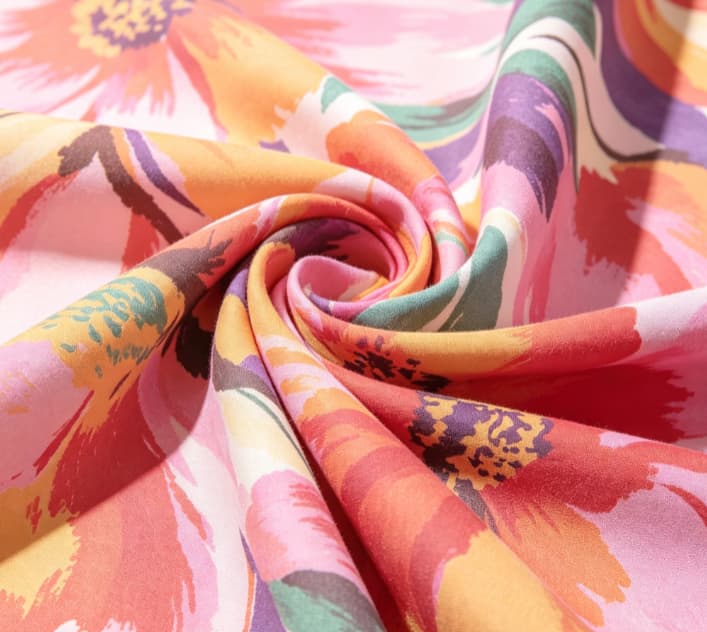
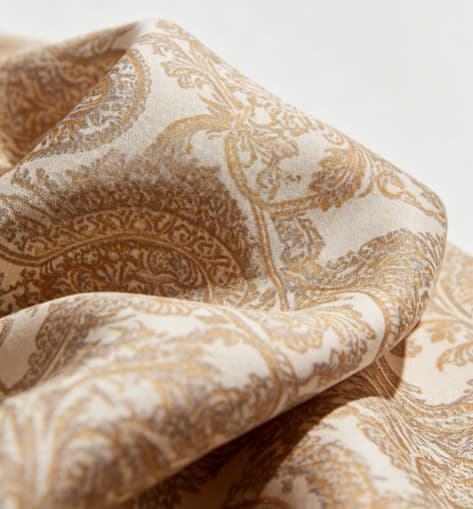
This is where digital printing truly dominates. A quality digital printer can reproduce photographic images, watercolor effects, and infinitely variable patterns that would require dozens of screens (and hundreds of hours) to recreate via traditional methods.
The product data for high-quality Brushed Cotton Digital Print Fabric confirms this: “Utilizing high-definition digital printing technology, patterns appear vibrant and lifelike with saturated, fade-resistant colors”. Compare that to screen printing, where each color is applied as a separate solid layer—gradients don’t exist, and fine detail is limited by the physical screen mesh.
For designers, small business owners, and even DIY home sewers, the ability to order custom-printed cotton digital printed fabric with zero setup fees is revolutionary. Want a single roll of fabric featuring your own artwork? Digitally printed brushed cotton can do that. Traditional printed cotton would require a minimum run of hundreds or thousands of meters just to justify making the screens.
Category 3: Durability and Maintenance (How It Wears)
| Feature | Brushed Cotton Digital Print Fabric | Traditional Printed Cotton |
|---|---|---|
| Pilling resistance | Good (modern anti-pilling finishes) | Variable—depends on cotton quality |
| Color fade resistance | Excellent (fade-resistant digital inks) | Moderate—screen inks can crack over time |
| Wash durability | Consistent (colors hold well) | Inconsistent (poor screen printing fades quickly) |
| Scratch resistance (pet owners) | Good—brushed surface hides minor wear | Poor—flat surface shows every flaw |
A common concern about brushed fabrics is pilling—those little fuzzy balls that form on fabric surfaces after repeated washing and friction. Historically, cheaper brushed cottons had serious pilling problems. However, modern Brushed Cotton Digital Print Fabric addresses this with specialized anti-pilling treatments. Some cotton variants incorporate technologies that “significantly reduce the impact of everyday wear on textiles and effectively prevent pilling”, with pill formation “reduced and the fabric surface remains clear”.
The product page for quality brushed digital cotton explicitly states it “resists pilling while balancing breathability and warmth”. So while some brushed fabrics still pill, a well-constructed digital print on a quality cotton base will hold up just fine for years of regular use. In fact, manufacturers of Brushed Cotton Digital Print Fabric have made anti-pilling a core engineering focus.
Wash care is straightforward: machine wash cold or warm, gentle cycle, and avoid high heat in the dryer (which can damage the brushed surface). Traditional printed cotton is similarly easy to care for, but lower-quality screen prints can crack or peel after repeated laundering, whereas digital pigment inks tend to bond more permanently with cotton fibers.
Category 4: Health, Safety, and Environment
| Feature | Brushed Cotton Digital Print Fabric | Traditional Printed Cotton |
|---|---|---|
| Eco-friendly dyes | Yes—many use low-impact pigment inks | Variable—screen printing uses more chemicals |
| Water consumption | Dramatically lower (up to 96% less) | High (0.49 tons per 100 meters) |
| Chemical usage | ~28% less than conventional printing | High |
| Allergen safety | Natural cotton, no harsh residues | Screen chemicals can leave residues |
| Suitable for babies/children | Yes (OEKO-TEX certified options available) | Check certification carefully |
This category might be the most surprising win for digital printing. The environmental case for digital textile printing is overwhelming. Traditional screen printing consumes “0.49 tons of water for every 100 meters of fabric printed”. Digital pigment printing, by contrast, uses “70-80 litres less water per metre than conventional printing”. Some advanced digital systems can “reduce water use by up to 97% compared to conventional textile printing”.
The reason is straightforward: screen printing requires washing screens, cleaning dye baths, and multiple wet processing steps. Digital printing eliminates most of that. The process “eliminates the process of washing the screens and dye baths, which means almost no wastewater is produced”. One study found digital configurations required “28% less in chemical usage, 35% less in electricity usage, and 36% less in water usage compared to traditional methods”.
For conscious consumers and eco-oriented brands, digitally printed cotton fabric is the clear choice. The technology uses less of everything—water, energy, chemicals, and waste—while producing superior results. Choosing Brushed Cotton Digital Print Fabric means voting for a greener textile industry.
On the safety front, high-quality Brushed Cotton Digital Print Fabric from reputable manufacturers uses eco-friendly dyes that are skin-safe and often OEKO-TEX certified. The product data emphasizes that “eco-friendly dyes ensure safety and enhance sleep quality for the whole family”. For anyone with sensitive skin, allergies, or young children at home, this is a meaningful difference.
Brushed Cotton Digital Print Fabric in Real Life: Four User Scenarios
Theory is fine, but what does this fabric actually do in someone’s home? Here are four real-world scenarios where the brushed-digital combination delivers unique value. Across every scenario, Brushed Cotton Digital Print Fabric proves its versatility.
Scenario 1: The Winter Bedding Upgrade
User: A family in a cold climate replacing their old cotton sheets.
Standard cotton sheets are too cold in winter. Flannel is warm but can feel heavy and trap moisture. Brushed Cotton Digital Print Fabric hits the sweet spot: warm enough for freezing nights but breathable enough to prevent night sweats. The brushed surface traps body heat efficiently while the cotton fiber’s natural breathability allows moisture vapor to escape.
Plus, digital printing means the sheets can feature high-resolution patterns—think winter woodland scenes, subtle plaid designs, or even family photos printed on custom pillowcases. For a home decor enthusiast, that level of personalization is a major upgrade from mass-market bedding.
Scenario 2: The Small Business Designer
User: An independent home textile designer launching a small collection of throw pillows and blankets.
Traditional printed cotton is a non-starter. The minimum order quantities (MOQs) for screen printing are typically hundreds or thousands of meters, representing a huge upfront investment and significant inventory risk.
Brushed Cotton Digital Print Fabric solves this problem directly: “Supports small-batch customization with bespoke designs, enabling unique personalization”. The designer can order exactly what they need—10 meters, 50 meters, whatever fits their launch plan. Designs can be tweaked between batches without penalty. Inventory risk is minimized because production matches actual demand.
This “print on demand” capability brings ‘just-in-time’ manufacturing methods closer to the small business operator. For thousands of small textile businesses, this shift has made entrepreneurship possible where it wasn’t before.
Scenario 3: The Pet Owner’s Sofa
User: A cat owner whose current sofa upholstery is shredded and covered in fur.
Pet-friendly fabrics need three things: resistance to scratches, easy cleaning, and minimal fur adhesion. Traditional printed cotton fails on the first count—those flat surfaces show scratches immediately and snag easily under claws.
Brushed Cotton Digital Print Fabric handles pet ownership surprisingly well. The brushed surface has a slight “fuzz” that actually helps hide minor scratches and wear. Fur doesn’t stick as aggressively because the raised fibers don’t trap hair the way a smooth weave does. And the digital printing process means you can get custom upholstery fabric featuring—if you want to be whimsical—photos of the very pet who’ll be sleeping on it.
While specialized pet-proof fabrics exist, they’re often synthetic and prioritize durability over comfort. Brushed cotton offers a natural-fiber alternative for pet owners who want breathable, non-toxic upholstery that still holds up reasonably well.
Scenario 4: The DIY Home Sewer
User: A hobbyist making custom quilts, curtains, and garment projects.
Sewing with printed cotton is standard, but most commercially available prints are generic—hundreds of people have the same fabric. Brushed Cotton Digital Print Fabric changes the game: the sewer can upload their own artwork, photographs, or patterns and have fabric printed exactly to their specifications.
The brushed texture is particularly nice for quilting because the surface softness reduces the need for heavy batting layers. For garment sewing, a brushed cotton digital print yields clothing that feels soft against the skin from the first wear (no break-in period required). And since digital printers handle unlimited colors with no extra cost, photographic prints on fabric become feasible for personal projects.
Why the Industry Is Moving to Digital
The market numbers tell a clear story. The global digital textile printing market was valued at approximately $3.5 billion in 2024 and is projected to grow significantly over the coming years, with some estimates reaching $10.71 billion by 2033 at a CAGR of 13.2%. Within this market, the cotton segment leads, holding an estimated share of 42.7% in 2026 due to “its natural affinity with various printing technologies”. Unsurprisingly, Brushed Cotton Digital Print Fabric is a major growth driver within that cotton segment.
Inkjet technology alone holds a 72% market share and continues to drive industry upgrades. This isn’t a niche trend—digital textile printing is becoming the default method for many fabric types, with cotton at the forefront.
What does this mean for you as a buyer, designer, or brand owner? It means the old trade-offs (custom designs require huge minimums, high-quality prints need long lead times, vibrant colors fade quickly) are disappearing. Brushed Cotton Digital Print Fabric represents the convergence of two superior technologies: the comfort of brushed cotton and the precision of digital printing.
Conclusion
Traditional printed cotton is not disappearing. It remains a cost-effective option for large-scale production and simple designs where cost per meter is the main factor.
However, for most other applications—custom designs, small batches, high-definition prints, complex gradients, winter bedding, pet-friendly use, and eco-friendly production—Brushed Cotton Digital Print Fabric offers clear advantages in performance and flexibility.
The key difference is simple: traditional printed cotton is designed for mass production, while Brushed Cotton Digital Print Fabric is built for more specific needs in design, quantity, lead time, and comfort.
Ready to Experience the Difference?
Instead of settling for generic printed cotton, Haihui Textile offers premium Brushed Cotton Digital Print Fabric with soft brushed comfort, vivid printing quality, and low-MOQ customization. Contact us today for samples or project consultation.