Introduction
If you have been shopping for sheets, T-shirts, or bedding recently, you may have noticed a growing shift toward a fabric called Tencel cotton. It is often mentioned alongside traditional cotton as a softer and more modern alternative in everyday textiles.
Compared with 100% cotton, Tencel cotton is commonly associated with improvements in comfort, moisture control, and ease of care, while still maintaining a natural feel that many people prefer. It is also increasingly used in clothing and home textiles as brands look for fabrics that balance performance with sustainability.
In the sections below, we will look at how the two fabrics differ in terms of feel, performance, and everyday use.
From Farm to Fiber: Where Cotton and Tencel Actually Come From
Before diving into performance numbers, it helps to understand what you are actually buying.
The Story of 100% Cotton
Cotton has been cultivated for thousands of years and remains one of the most widely used natural fibers in textiles. It is grown from cotton plants, harvested from seed pods, and processed into yarn before being woven into fabric.
While the production process is well established, conventional cotton farming can be resource-intensive, particularly in water use, land demand, and agricultural inputs. This has led to increasing interest in more sustainable alternatives.
The global cotton industry continues to grow alongside textile demand, but it also faces ongoing concerns related to environmental pressure and production efficiency.
What Actually Is Tencel?
Tencel is a lyocell fiber developed by Lenzing, an Austrian textile company focused on sustainable fiber innovation. Unlike cotton, it is not grown as a crop. Instead, it is produced from wood pulp sourced from responsibly managed forests, mainly eucalyptus.
What makes Tencel different is its closed-loop production system. In this process, the solvent used to dissolve wood pulp is recovered and reused at very high rates, reducing waste and lowering environmental impact during manufacturing. This makes the process more controlled compared to conventional fiber production.
Because of this production method, Tencel is widely recognized for efficient resource use and a lower environmental footprint compared with traditional cotton processing.
Tencel Cotton: The Best of Both Worlds
Tencel cotton fabric combines Tencel lyocell fibers with cotton, often using long-staple cotton for improved quality and comfort. The blending ratio varies by manufacturer, but the goal is to balance the strengths of both fibers.
This combination allows the fabric to keep the familiar structure and breathability of cotton while gaining the smoother surface, better moisture control, and enhanced comfort associated with Tencel fibers.
Head-to-Head Comparison: Tencel Cotton vs 100% Cotton
Let’s put these fabrics side by side across the metrics that actually matter when you are choosing clothing or bedding.
| Performance Metric | Tencel Cotton (Blend) | 100% Cotton | Winner |
|---|---|---|---|
| Moisture Absorption | Up to 50% more than cotton; absorbs roughly 50% of its weight in water | Absorbs approx. 25% of its weight in water | Tencel Cotton |
| Wrinkle Resistance | Naturally high due to smoother fiber structure | Poor; wrinkles easily | Tencel Cotton |
| Breathability (Air Permeability) | Very high; increases with higher Tencel content | High, but less than Tencel blends | Tencel Cotton |
| Durability (Tensile Strength) | Superior to cotton in both wet and dry conditions | Moderate; weakens significantly when wet | Tencel Cotton |
| Antimicrobial Properties | Naturally resistant to bacterial growth | No inherent antimicrobial properties | Tencel Cotton |
| Environmental Impact | Closed-loop production with almost all solvent is recovered in a closed-loop system; wood from certified forests. | Water-intensive; heavy pesticide use for conventional cotton | Tencel Cotton |
| Cost | Mid-range; more affordable than pure Tencel, more than basic cotton | Wide range; basic cotton is cheap, and organic cotton costs more | Tie |
| Texture/Feel | Silky smooth, almost like silk | Soft but generally less smooth than Tencel | Tencel Cotton |
Let’s unpack what these metrics actually mean for you.
Moisture Management and Breathability: Why Tencel Cotton Keeps You Cooler
Here is a number that often surprises people: Tencel can absorb up to 50% of its weight in moisture, compared to around 25% for cotton. However, absorption alone does not fully explain the difference in comfort. A key advantage of Tencel is how efficiently it releases moisture. Cotton tends to hold moisture close to the skin, which can sometimes create a damp feeling. In contrast, Tencel’s smooth fiber structure helps move moisture away from the body and release it more quickly, supporting a drier wearing experience.
Under high humidity conditions, lyocell can absorb around 20% of its weight in moisture, which is noticeably higher than cotton under the same environment. Tencel also shows a higher moisture regain level, around 11.0–11.5%, compared to roughly 8.5% for organic cotton.
In practical terms, this means that if you are a hot sleeper, Tencel cotton bedding may help you feel more comfortable and less overheated at night. For summer clothing or activewear, it can help maintain a cooler and drier feel during daily use. Some textile studies have also shown that Tencel blended fabrics perform well in areas such as breathability, moisture handling, and thermal comfort when compared with 100% cotton.

Durability and Longevity: Does Tencel Cotton Last Longer?
For many cotton users, this is where Tencel brings a noticeable difference. Research indicates that Tencel fibers generally have strong mechanical performance, including good tensile and tear strength compared with cotton. One important advantage is that Tencel maintains its strength even when wet, while cotton tends to weaken in similar conditions. This means cotton fabrics can become more vulnerable to stretching or damage during washing, whereas Tencel holds its structure more consistently in both wet and dry use.
It is worth noting that performance can vary depending on the blend ratio. As the Tencel content increases in a fabric, properties such as softness, breathability, and moisture handling often improve. At the same time, certain mechanical characteristics like abrasion resistance may vary slightly depending on fabric construction. For most everyday applications, a balanced blend is usually preferred to achieve overall performance stability.
Studies comparing pure Tencel, cotton, and blended fabrics have found that Tencel-cotton blends generally perform better in tensile strength, tear resistance, and drape compared to 100% cotton fabrics.
Wrinkles and Appearance: The Low-Maintenance Advantage
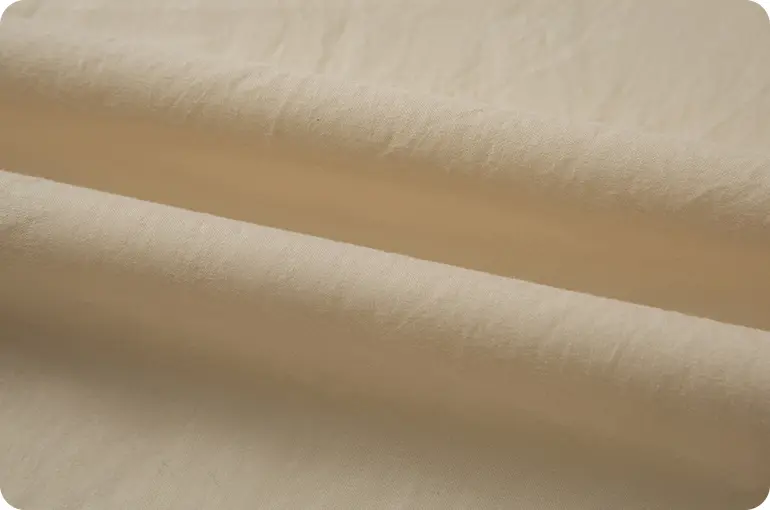
Anyone who wears 100% cotton is familiar with how easily it wrinkles after washing. This is mainly due to the natural structure of cotton fibers, which do not hold shape as smoothly during drying and use.
Tencel behaves differently. Its fiber surface is smoother and more uniform, which helps reduce creasing and improve fabric drape. As a result, Tencel-based fabrics often come out of the wash looking neater and require less ironing.
When blended with cotton, Tencel can also improve the overall appearance of the fabric, giving it a slightly smoother finish and better wrinkle resistance compared with traditional cotton alone. For people with busy routines or frequent travel, this can make everyday maintenance noticeably easier.
Sustainability: Tencel Cotton’s Biggest Edge
The sustainability gap between conventional cotton and Tencel is wide enough to matter, and the data is compelling.
Conventional cotton is one of the most water-intensive crops on the planet. A single cotton T-shirt requires approximately 2,700 liters of water to produce—enough for one person to drink for two and a half years. Pesticide use in cotton farming remains a major environmental concern, and the processing phase adds chemical pollution to waterways.
Tencel’s closed-loop production system changes the calculation entirely. More than 99.8% of the solvent is recovered and reused, meaning almost nothing goes to waste. The raw material comes from FSC- or PEFC-certified sustainably managed forests, ensuring that wood sources are renewable and responsibly harvested. Independent life-cycle analyses show that Tencel lyocell production reduces water consumption by up to 95% and carbon emissions by roughly 60% compared to conventional cotton, depending on the specific manufacturing conditions.
The global lyocell fiber market reflects this shift in consumer and industrial preference. The market was valued at USD 1.5 billion in 2025 and is expected to reach USD 3.2–3.3 billion by 2031, growing at a CAGR of 8.9%. According to a recent survey by PEFC, 71% of consumers want certification labels confirming that forest fibers in their clothing come from sustainably managed forests.
For brands and consumers alike, Tencel cotton represents a meaningful step toward lower-impact textile consumption.
Practical Applications: Where Tencel Cotton Excels
One of the strengths of Tencel cotton is its versatility. The fabric works exceptionally well across multiple categories.
Bedding and Sheets
This is probably the most common application for Tencel cotton, and for good reason. The moisture-wicking properties keep hot sleepers comfortable, the smooth surface feels luxurious against the skin, and the natural resistance to bacterial growth means sheets stay fresher longer between washes. For households with allergies or sensitive skin, Tencel cotton bedding is a standout choice.
Apparel and Everyday Clothing
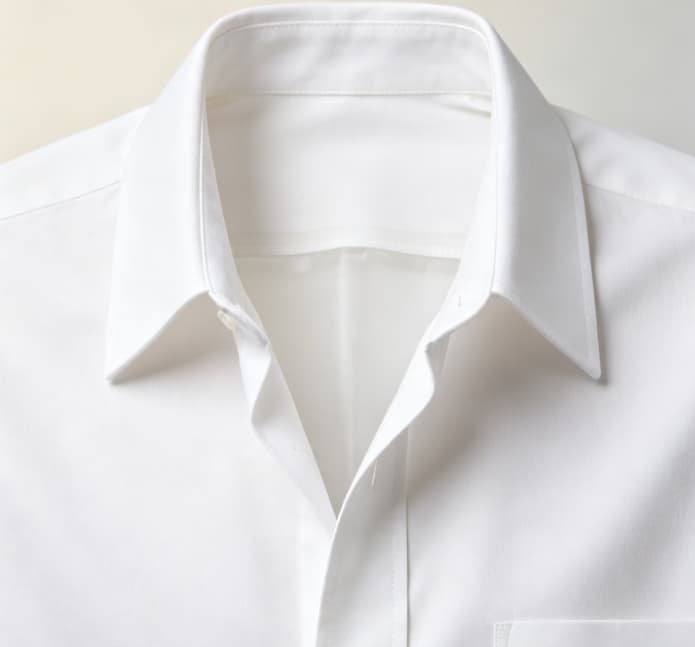
Tencel cotton works beautifully in T-shirts, dresses, shirts, activewear, and underwear. The fabric breathes well, drapes elegantly, and resists the pilling that plagues lower-quality cotton knits after repeated washing. For summer garments especially, the combination of high air permeability and moisture management makes Tencel cotton feel noticeably cooler than pure cotton options.
Denim and Casual Wear
Denim brands have taken notice. Blending cotton with Tencel lyocell creates denim that has “a soft and luxurious hand feel” while maintaining the classic silhouette and shape retention that denim wearers expect. The improved tenacity of Tencel fibers also means garments stay in rotation longer without losing their form.
Home Textiles and Accessories
Beyond bedding, Tencel cotton works well in curtains, upholstery, towels, and other home textiles. The fabric’s hypoallergenic properties and resistance to dust mites make it particularly appealing for households with respiratory sensitivities.
Real-World Scenarios: Who Benefits Most from Tencel Cotton?
Let’s walk through three typical users to see which fabric fits best.
Scenario 1: The Hot Sleeper. Maria lives in a warm climate and wakes up sweating most nights. She has tried cotton sheets, bamboo sheets, and cooling mattress pads. After switching to Tencel cotton bedding, she notices an immediate difference. The sheets wick moisture away from her body, regulate temperature throughout the night, and emerge from the dryer with few wrinkles. For Maria, Tencel cotton solves a problem cotton could not.
Scenario 2: The Sustainable Shopper. James wants to reduce his environmental footprint but is not ready to compromise on comfort or durability. He avoids fast fashion and looks for garments that will last. Tencel cotton appeals to him because of the closed-loop production, FSC-certified wood sources, and the research confirming superior durability over cotton. He pays slightly more upfront but gets longer wear and lower environmental impact.
Scenario 3: The Frequent Traveler. Angela travels for work 15 days a month. She needs clothing that looks professional, resists wrinkles, and handles being stuffed into a suitcase. 100% cotton shirts come out of the bag looking like they need an hour with a steamer. Tencel cotton blouses and shirts travel better, resist creasing, and feel comfortable across different climates. She does not own an iron, and with Tencel cotton, she does not need one.
Potential Downsides: What Tencel Cotton Does Not Do Perfectly
No fabric is perfect, and Tencel cotton has limitations worth acknowledging.
First, cost. While Tencel cotton is generally more affordable than pure Tencel, it typically costs more than basic 100% cotton. If budget is your absolute top priority, basic cotton still wins on price alone. However, when you factor in longevity and reduced replacement cycles, the value equation shifts.
Second, abrasion resistance can vary depending on the specific blend ratio and fabric construction. Some studies have observed slight declines in abrasion resistance as Tencel content increases, though this is highly dependent on weave structure and finishing. Choosing high-quality Tencel cotton from reputable manufacturers minimizes this concern.
Third, availability. While Tencel cotton is becoming more common, it still does not have the universal availability of 100% cotton. You may need to shop more selectively to find Tencel cotton products that meet your preferences for weave, weight, and price point.
FAQ
Q: Is Tencel cotton better than 100% cotton for sensitive skin?
Yes. Tencel‘s smooth fiber surface reduces friction and irritation. The fabric is also naturally hypoallergenic and resistant to bacterial growth, making it an excellent choice for eczema or allergy-prone individuals.
Q: Can I wash Tencel cotton in hot water like cotton?
No. Use cool or warm water (max 30–40°C) and a gentle cycle. Tencel fibers are strong, but high heat can compromise the fabric’s structure over time. Air drying or low-heat tumble drying is recommended.
Q: Does Tencel cotton shrink like 100% cotton?
Much less. Tencel fibers have better dimensional stability than cotton. A Tencel cotton blend will experience minimal shrinkage compared to pure cotton, especially if you follow care instructions.
Q: Is Tencel cotton environmentally friendly?
Yes, significantly more than conventional cotton. Tencel lyocell is produced in a closed-loop system that recovers over 99.8% of solvents, uses FSC-certified wood from sustainable sources, and is fully biodegradable at the end of life.
Q: Why is Tencel cotton more expensive than regular cotton?
Because the closed-loop production technology and certified wood sourcing cost more than conventional cotton farming and processing. You pay for superior performance and lower environmental impact.
The Verdict: Which Fabric Should You Choose?
For most modern clothing and bedding applications, Tencel cotton is often considered a strong option. It generally performs well in areas such as moisture management, wrinkle resistance, durability when wet, and environmental impact, while still offering a comfortable feel that is comparable to or better than traditional cotton.
That does not mean cotton has no place. In situations where cost is the main concern or where a more structured and crisp fabric feel is preferred, 100% cotton is still widely used. Organic cotton also helps reduce some of the environmental impact associated with conventional cotton, although it does not offer the same level of moisture control and wrinkle resistance as Tencel-based fabrics.
If you are looking for a fabric that combines improved performance, longer usability, a softer feel, and a lower environmental footprint, Tencel cotton is worth considering.
Ready to Upgrade Your Fabric Experience?
Now that you have seen the comparison, you may have a clearer idea of how the two fabrics perform in different situations. Whether you are a brand sourcing materials for your next textile collection or a buyer looking for bedding and clothing that balance comfort and functionality, Tencel cotton offers a practical solution worth exploring.
Take the next step today.
Browse the Tencel cotton collection at Haihui Textile and explore different fabric options for your needs. Our materials combine Lenzing Tencel fibers with high-quality cotton to create textiles designed for everyday comfort, breathability, and long-term use.