Introduction
You’ve invested in quality garments — crisp shirts, structured blazers, well-tailored pieces that are supposed to last. But after a few wash cycles, something goes wrong. The collar loses its body. The front placket starts to crinkle. A bubble appears between the shell fabric and the inner layer that simply won’t press out. If this sounds familiar, the issue probably isn’t the outer fabric. It’s the interlining fabric hidden inside.
When the Hidden Layer Fails, the Whole Garment Pays
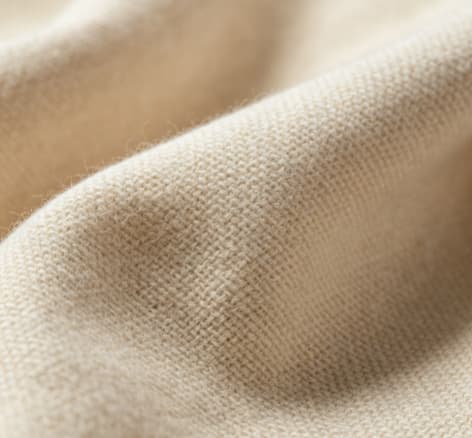
Most people don’t think about interlining until something goes wrong — and by then, it’s too late. Interlining fabric is the structural backbone of a finished garment. It sits between the outer shell and the lining, giving collars their firmness, cuffs their body, and front panels their clean, flat appearance. Done right, it’s invisible. Done wrong, it ruins everything.
The challenge is that not all interlining fabrics are built to survive real-world use. Many budget options bond well on day one but begin to separate, bubble, or shrink after repeated washing. For garment manufacturers sourcing in volume, this isn’t just a quality issue — it becomes a returns issue, a brand reputation issue, and a sourcing headache.
So what separates a reliable interlining from one that’s going to let you down?
What “Wash and Wear” Actually Means for Interlining Fabric
The term “wash and wear” gets thrown around a lot in the textile industry, but in the context of interlining fabric, it has a very specific meaning — and a very high bar.
Ordinary cotton fabrics crinkle after washing. That’s expected behavior. But when a garment uses interlining, the expectation is that washing should not cause the bonded areas to distort, pucker, or lose their shape. The interlining fabric should actively resist the mechanical stress of the wash cycle, maintain its bond with the shell fabric, and return the garment to its original structure once dry.
This is what a true “wash and wear” interlining does. It’s not just about surviving the wash — it’s about ensuring the garment performs exactly the same after wash twenty as it did after wash one.
The D-Line.D Mid-Range Interlining Series from Haihui Textile is designed to meet exactly this standard. The product is positioned specifically as a “wash and wear” interlining, developed to address the crinkling problem that plagues garments using lower-grade inner fabrics. For manufacturers producing shirts, formal wear, or structured casual garments at scale, this kind of performance is non-negotiable.
How Washing Shrinkage Quietly Destroys Garment Structure
Here’s a problem that’s easy to underestimate: shrinkage.
When an interlining fabric shrinks at a different rate than the outer shell fabric during washing, the tension between the two layers causes the garment to pucker, warp, or bubble. Even a small difference in dimensional stability — say, 1–2% — can make a noticeable visual difference on a finished garment, especially in flat-front shirt panels or structured collar stands.
Industry testing uses standardized national benchmarks for acceptable washing shrinkage in interlining fabrics. The D-Line.D series is tested to perform below these national standards — meaning its shrinkage rate is lower than the minimum threshold the industry considers acceptable. In practical terms, this gives garment manufacturers a meaningful buffer: the interlining is less likely to pull, shift, or distort relative to the outer fabric after multiple wash cycles.
For sourcing professionals evaluating interlining suppliers, washing shrinkage data is one of the first metrics worth requesting. A supplier that can demonstrate consistent, documented performance below national standards is a supplier making a verifiable quality claim — not just a marketing promise.
The Two Failure Modes Most Garment Buyers Never Anticipate
When interlining fabric underperforms, it almost always fails in one of two ways. Both are visible to the end consumer. Both damage the brand.
Bubbling happens when the adhesive bond between the interlining and the outer fabric weakens and separates in localized areas. The result is a visible blister or bubble on the garment surface — most commonly in collar rolls, cuffs, and front button plackets. Once bubbling starts, it typically worsens with each wash.
Crinkling (sometimes called wrinkling or puckering) happens when the interlining loses dimensional stability relative to the shell fabric. Instead of holding the fabric smooth and flat, the interlining creates tension that causes uneven surface distortion — the opposite of what it’s supposed to do.
Both failure modes are preventable. They come down to bonding strength and shrinkage control — exactly the two properties that should be evaluated before a sourcing decision, not after it.
What High Bonding Strength Actually Requires
Achieving high bonding strength in a woven interlining isn’t just about the adhesive. The quality of the base fabric itself matters enormously. If the yarn used to weave the interlining fabric is inconsistent in weight, twist, or density, the adhesive coating will bond unevenly — creating weak points that later become bubbles.
The D-Line.D series addresses this at the yarn level. The fabrics are woven from specially selected yarns, which provide a consistent base structure for the adhesive coating to adhere to. The result is a more uniform bond across the entire fabric surface — fewer weak points, better long-term performance after repeated washing.
This is why high bonding strength isn’t just about how hard the interlining grips the shell fabric on day one. It’s about how consistently that bond holds across the entire surface, over time.
Comparing Interlining Fabric Performance: What the Data Looks Like
When evaluating interlining fabric for production use, most procurement teams look at a short list of measurable properties. The table below summarizes typical performance benchmarks and how mid-range woven interlinings like the D-Line.D series compare to common alternatives.
| Washing Shrinkage | Often above the national standard | Within the national standard | Below the national standard |
| Bonding Strength | Moderate; tends to weaken after 5–10 washes | Good initial bond | High; maintains bond through repeated washing |
| Crinkling Resistance | Low | Moderate | High (“wash and wear” rated) |
| Yarn Selection | Mass-production yarn, variable quality | Standard yarn | Specially selected yarn, controlled consistency |
| Fabric Variety | Limited | Moderate range | Large collection, multi-fabric compatibility |
| Target Application | Budget garments, disposable fashion | Mid-market casual | Mid-market structured garments, shirts, formal wear |
The comparison isn’t meant to suggest that non-woven or standard woven interlinings have no place in the market — they do. But for garment manufacturers producing structured pieces where appearance after washing is a key quality signal, the performance differences in the table above are meaningful and measurable.
Matching Interlining Fabric to the Right Shell Fabric
One of the more practical challenges in interlining sourcing is compatibility. An interlining that performs beautifully with a heavy cotton shirting may behave very differently when bonded to a fine poplin, a lightweight twill, or a blended weave. Mismatched pairing is one of the most common causes of bonding failure — even when both the shell fabric and the interlining are individually high quality.
This is where fabric range matters. The D-Line.D series offers a large collection of fabric weights and constructions, designed to be matched with a variety of outer fabrics. For manufacturers working across multiple product lines — casual shirts, dress shirts, lightweight jackets — having access to a range of interlining options from a single supplier simplifies the specification process and reduces the risk of compatibility problems.
The table below gives a general framework for matching interlining fabric weight to common shell fabric types.
| Lightweight poplin or voile | Light to ultra-light woven interlining | Avoid stiffness; prioritize drape preservation |
| Standard cotton shirting | Light to medium woven interlining | Balance structure with softness at the collar and cuff |
| Twill or canvas | Medium woven interlining | Higher bonding strength needed; focus on shrinkage match |
| Blended (poly-cotton, etc.) | Medium woven, test bonding temp carefully | Adhesive activation temperature affects bond quality |
| Heavier structured fabric | Medium to heavy woven interlining | Structural support is primary; surface appearance is secondary |
Working with a supplier who maintains a broad collection gives buyers more flexibility to test and specify the right match for each application — rather than forcing a compromise.
Why Mid-Range Interlining Is the Smarter Volume Sourcing Decision
There’s a persistent misconception in garment manufacturing procurement: that cutting costs on “invisible” components like interlining fabric is a low-risk decision. The logic goes — if the customer can’t see it, they won’t know the difference.
This turns out to be exactly wrong.
The customer can’t see the interlining. But they absolutely see and feel the consequences of a poor-quality interlining fabric after washing. A shirt that crinkles, a collar that bubbles, a jacket front that starts to pucker — these are the problems that generate returns, complaints, and brand erosion. And they’re directly traceable to sourcing decisions made before production even started.
Mid-range interlining — like the D-Line.D series — occupies a practical sweet spot. It delivers measurably higher performance than budget options in the two areas that matter most (bonding strength and shrinkage control), without the cost premium of high-end specialty interlinings designed for luxury couture or technical performance wear. For manufacturers producing structured garments at volume for mid-market retail or wholesale, this is where the value-to-performance ratio peaks.
Some procurement teams try to bridge the gap by testing cheap interlining through accelerated wash trials before committing to production. This is smart practice. But it’s worth noting that accelerated wash testing — typically 20–30 cycles — is where the differences between budget and mid-range interlining become unmistakable. Bonding strength degradation, progressive bubbling, and cumulative shrinkage all become visible in ways that a single-wash test won’t reveal.
Real-World Applications: Where D-Line.D Interlining Fabric Performs
To make the performance claims concrete, it helps to look at specific garment categories where mid-range interlining fabric makes the most visible difference.
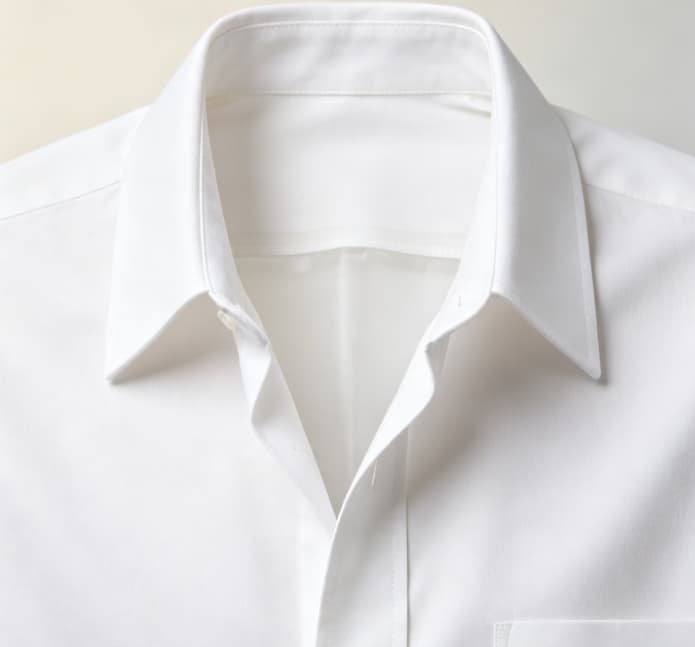
Dress and business shirts are the most demanding application. Front plackets, collar stands, and collar falls all require interlining that can hold a clean, flat appearance through repeated domestic washing — often at 40°C or higher. A shirt that loses its collar shape after five washes is a quality failure regardless of how good the outer fabric is.
Structured casual wear — chore coats, casual blazers, overshirts with structured fronts — often uses lighter interlining than formal wear, but still requires consistent bonding and dimensional stability. The customer expectation here is that the garment maintains its visual structure through the wash-wear-wash cycle without needing to be dry cleaned.
Uniform and workwear applications place particularly high demands on interlining durability. Uniforms are washed frequently, often at higher temperatures, and expected to maintain professional appearance across many months of use. Washing shrinkage below national standards is especially relevant here.
Mid-market wholesale garments, where a manufacturer is producing for multiple retail buyers with different quality standards, benefit from a consistent, reliable interlining specification that can be applied across product lines without per-style customization.
What to Ask Your Interlining Supplier Before Placing an Order
If you’re currently sourcing interlining fabric and haven’t asked these questions, it’s worth doing before your next production run.
- What is the documented washing shrinkage rate for this interlining, and how does it compare to national standards?
- What bonding strength data is available, and across how many wash cycles was it tested?
- What shell fabric types is this interlining recommended for, and has it been tested with fabrics similar to your outer material?
- Does the supplier maintain a range of interlining weights and constructions, or are you limited to one or two options?
- What is the manufacturer’s quality control process at the yarn selection and weaving stage?
These aren’t difficult questions. But the answers — or the absence of clear answers — will tell you a great deal about whether a supplier is making verifiable quality claims or simply offering a price.
The Right Interlining Fabric Makes Every Wash a Non-Issue
Garment quality isn’t just about what a piece looks like on the shelf. It’s about what it looks like after the customer has owned it for six months. That’s when the interlining fabric inside either earns its place or exposes itself as the weak link.
The D-Line.D Mid-Range Interlining Series is built around a simple principle: the garment should perform consistently, wash after wash, without the crinkling, bubbling, or distortion that signals a structural failure. With washing shrinkage below national standards, high bonding strength, specially selected yarns, and a broad fabric collection for multi-material compatibility, it’s designed to solve the specific problems that mid-market garment manufacturers encounter at volume.
If you’re sourcing interlining fabric for structured garments and want to evaluate whether the D-Line.D series fits your production requirements, the most straightforward step is to request samples and run your own wash testing against your current specification. The performance difference tends to be visible — and measurable — by wash cycle ten.
Reach out to the Haihui Textile team to discuss your application and request samples for evaluation.